Why AI Makes Human Communication More Valuable
AI has made it easier than ever for organisations to produce content. Reports can be summarised, articles drafted, presentations structured and social posts created in a fraction of the time they once took.
I use AI myself, and I think there are enormous advantages in doing so. It can help us interrogate ideas, research audiences, test messages and prepare for the questions we might face. Used well, it gives us more opportunity to think about communication, rather than simply spending our time producing it.
But I think something else is happening alongside this.
As producing the words becomes easier, knowing who is behind them, whether they understand them and whether they are prepared to stand behind them may become considerably more important.
More content doesn't automatically create more trust
I was particularly interested in some recent work from Edelman looking at how brand storytelling is changing.
Its 2026 Trust Barometer paints a fairly sobering picture of trust more broadly. Seven in ten people globally are unwilling or hesitant to trust someone who has different values, facts, problem-solving approaches or cultural backgrounds. In the UK, the figure is 76%. Edelman describes this as a move towards ‘insularity’, with people retreating towards smaller and more familiar circles.
Edelman's EMEA editorial team subsequently looked at what this environment means for brand communication in the age of AI. Its analysis argues that, as AI-generated content proliferates, audiences are looking for greater transparency and accountability, alongside clearer evidence of human judgement. It sees identifiable voices, executive commentary and genuine expertise becoming increasingly valuable as a result.
I think the distinction between the research and Edelman's interpretation of it matters. We can't simply conclude that people don't trust AI, because Edelman's own research presents a much more nuanced picture. Its 2025 polling across five markets found that greater familiarity and positive experience with AI could actually increase trust in the technology. Edelman
For me, the more useful question for organisations isn't whether audiences trust AI. It's what audiences need in order to trust you.
When anybody can produce the words, who stands behind them matters
For most of my career, producing polished corporate content required a certain amount of time, skill and resource. AI has changed the economics of this dramatically.
An organisation can now produce more content, more quickly and in more formats. That creates huge opportunities, but it also means polish on its own tells us less than it once did.
A beautifully structured article doesn't necessarily tell me who knows the subject. A polished presentation doesn't tell me whether the person delivering it really understands the argument. A carefully crafted corporate statement doesn't tell me who is prepared to explain it when the obvious follow-up question arrives.
This is where I think the human being becomes more valuable.
Not because humans have some magical ability to produce sentences that AI never could, and certainly not because audiences will always be able to identify which words were generated with AI assistance. I don't think either is a particularly useful argument.
The value comes from what happens when somebody has to move beyond the prepared words.
- Can they explain why something matters?
- Can they put it into context?
- Can they respond when somebody disagrees?
- Can they adapt their explanation when the audience doesn't understand?
- Can they answer the question that wasn't anticipated, acknowledge the one they can't answer and make a judgement about what it is useful and appropriate to say?
And perhaps most importantly, are they willing to put their own name, expertise and reputation behind what the organisation is communicating?
Expertise becomes more valuable when we can see it
One of the phrases that stood out for me in Edelman's analysis was the idea of content being ‘attributable’ and ‘accountable’.
This takes us beyond the familiar discussion about whether communication feels ‘authentic’.
If an engineer explains a new technology, a scientist talks about research, a sustainability leader answers questions about a company's commitments or a CEO explains a difficult business decision, we're able to connect the message to a person who has knowledge, experience and some degree of accountability for what they're saying.
They bring context that may never have made it into the corporate copy. They can qualify a point, challenge an assumption, explain where uncertainty remains and respond to the audience in front of them.
Their expertise becomes visible.
Interestingly, Edelman's own September 2026 analysis of AI agents makes a similar point from the other direction. It argues that as AI takes on more parts of a workflow, human expertise can be concentrated where judgement, context, relationships, ethics and reputation matter most.
I think communication belongs firmly in this territory.
AI can help us prepare an answer. The person still has to understand when to use it, how to adapt it and whether it should be said at all.
This is why organisations need Brand Champions
This is also why my definition of a Brand Champion has become broader over the years.
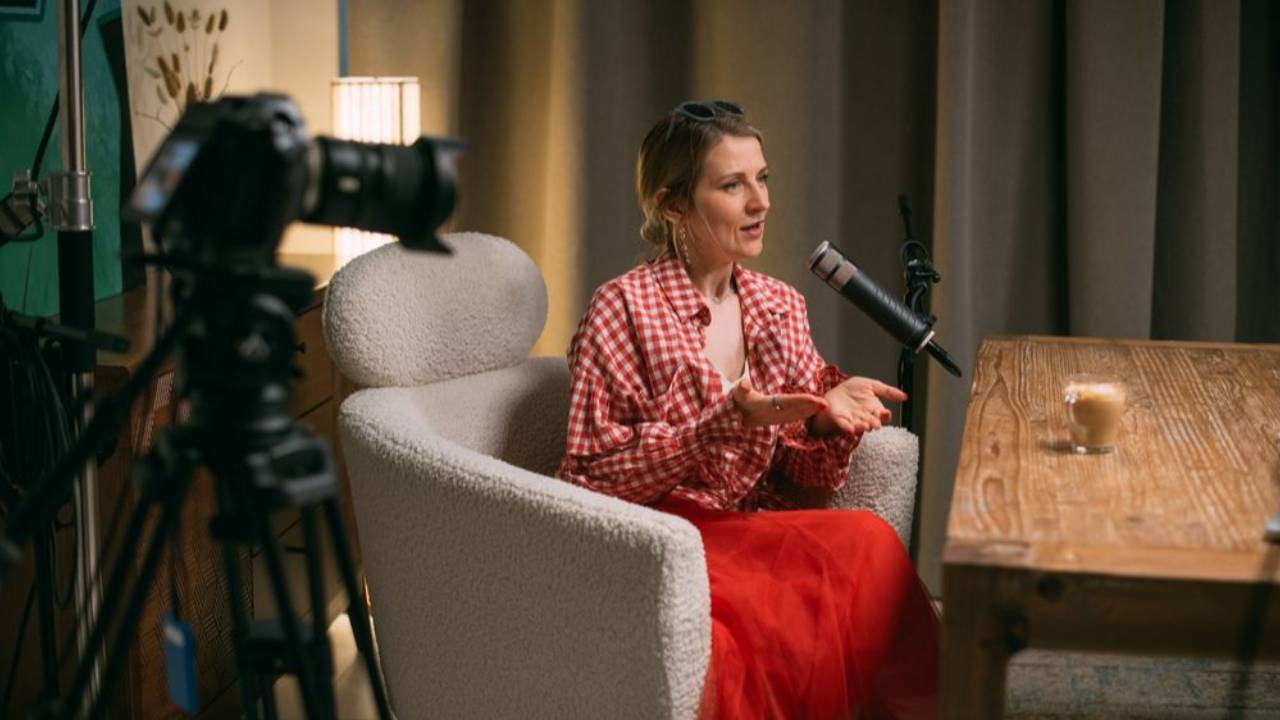
I think of Brand Champions as people who can represent their organisation effectively wherever they communicate. Sometimes this will be in a formal media interview or presentation, but it might equally be on a panel, podcast or webinar, in a live video, during an internal meeting or in a conversation with an important customer.
The common factor isn't the platform. It's that another human being is encountering the organisation through them.
A Brand Champion therefore can't simply be somebody who has been given the approved message and can repeat it accurately. They need to understand it well enough to interpret it, communicate it naturally and make it relevant to the people in front of them.
They also need the confidence to cope when communication stops being predictable.
I've worked with plenty of brilliant subject matter experts who know vastly more about their field than I ever will, yet worry about representing their organisation because they don't know what somebody might ask them. Once you give them practical ways to prepare, structure what they know and deal with the unexpected, something changes. Their expertise is no longer trapped behind the fear of saying the wrong thing.
That's an increasingly valuable organisational asset.
AI should make communication training more important, not less
There is a temptation to think that better AI tools will solve more of our communication problems for us.
They'll certainly solve some. I already see enormous potential for AI in helping people prepare more effectively: researching an audience, challenging an argument, generating realistic questions, finding holes in a message or helping someone turn a mass of expertise into something another person can understand.
But I wouldn't want somebody representing my organisation simply because they had access to an excellent AI tool.
I'd want them to have judgement.
I'd want them to understand the subject, the organisation and the audience. I'd want them to recognise when an AI-generated suggestion was bland, inappropriate, inaccurate or simply didn't sound like something they would ever say.
And when the preparation ended and the conversation began, I'd want them to be able to think.
This is one reason I'm increasingly interested in weaving AI into communication development rather than treating it as a separate subject. The opportunity isn't to choose between human communication and AI. It's to use the technology to make the human better prepared for the moments in which their judgement and expertise matter.
The opportunity for organisations is bigger than producing more content
For communications teams, I think there's a strategic question here.
AI gives us an extraordinary ability to scale organisational content. But are we investing at the same time in the people who can give that content a recognisable human source?
Who are the experts people could learn from? Who can explain the organisation's thinking rather than simply repeat its messaging? Who has useful experience and a point of view? And who could become a trusted representative if we gave them the communication skills and confidence to step forward? (Read: Spokesperson Media Training: How to Represent your Brand with Confidence)
This doesn't only mean the CEO or the people already comfortable on a stage. Some of the most compelling Brand Champions I've worked with started as subject matter experts who weren't particularly interested in becoming ‘spokespeople’. What they did have was knowledge, enthusiasm and something worth sharing.
The communication skills can be developed around this.
AI may continue to make organisational communication faster, easier and more sophisticated. I don't see this reducing the value of the people behind it. I think it raises the bar for what we need those people to contribute.
Because when content itself becomes abundant, expertise, judgement and accountability become much harder to manufacture.
And ultimately, the purpose of communication isn't simply to share information. It's to help people understand, remember and care enough to become advocates themselves.
For this, we still need people.
You can read more about my thoughts on AI here: Why Human Communication Matters More in the Age of AI
Common Questions about AI and Human Communication
Will AI replace the need for good communication skills?
AI can make preparation and content creation considerably easier, but many important communication situations still require human judgement, adaptability and the ability to respond in real time. Presentations, interviews, panels, podcasts, meetings and Q&A sessions all involve moments that can't be completely scripted in advance. The more useful opportunity is to use AI to improve preparation while developing the human communication skills needed to use this preparation effectively.
How can organisations use AI without losing authenticity?
Authenticity isn't simply a question of whether AI was involved in creating the words. Organisations can use AI for research, preparation, drafting and stress-testing while ensuring the people communicating understand the message, apply their own judgement and express it naturally. Being clear about expertise and accountability also helps audiences understand who stands behind what they're hearing.
What does AI mean for the role of a Brand Champion?
It potentially makes the role more valuable. As organisations can create more content at greater speed, Brand Champions provide identifiable expertise and human judgement. They can interpret information, explain why it matters, respond to questions and represent the organisation credibly across presentations, interviews, panels, podcasts and everyday stakeholder conversations.
Want to put this into practice?
AI can help you prepare, but knowing what you want people to understand, remember and care about still starts with getting clear on your message.
My free Create Your Magnetic Message masterclass will help you identify what really matters, shape it around your audience and communicate it with greater clarity and confidence.
It's a practical introduction to the approach I use in the Brand Champion Bootcamp and in my work training senior leaders, spokespeople and subject matter experts.
Rebecca Jabbar