Use AI to become a better communicator
AI should make you a better communicator. Not communicate for you.
AI can help you prepare for presentations, explore your ideas and practice answering difficult questions. Used thoughtfully, it can also help you develop the communication skills you'll need when you're speaking for yourself.
The Brand Champion Bootcamp combines practical, CPD-certified communication training with AI coaching guides, helping you apply what you learn to your own role, audiences and communication challenges.
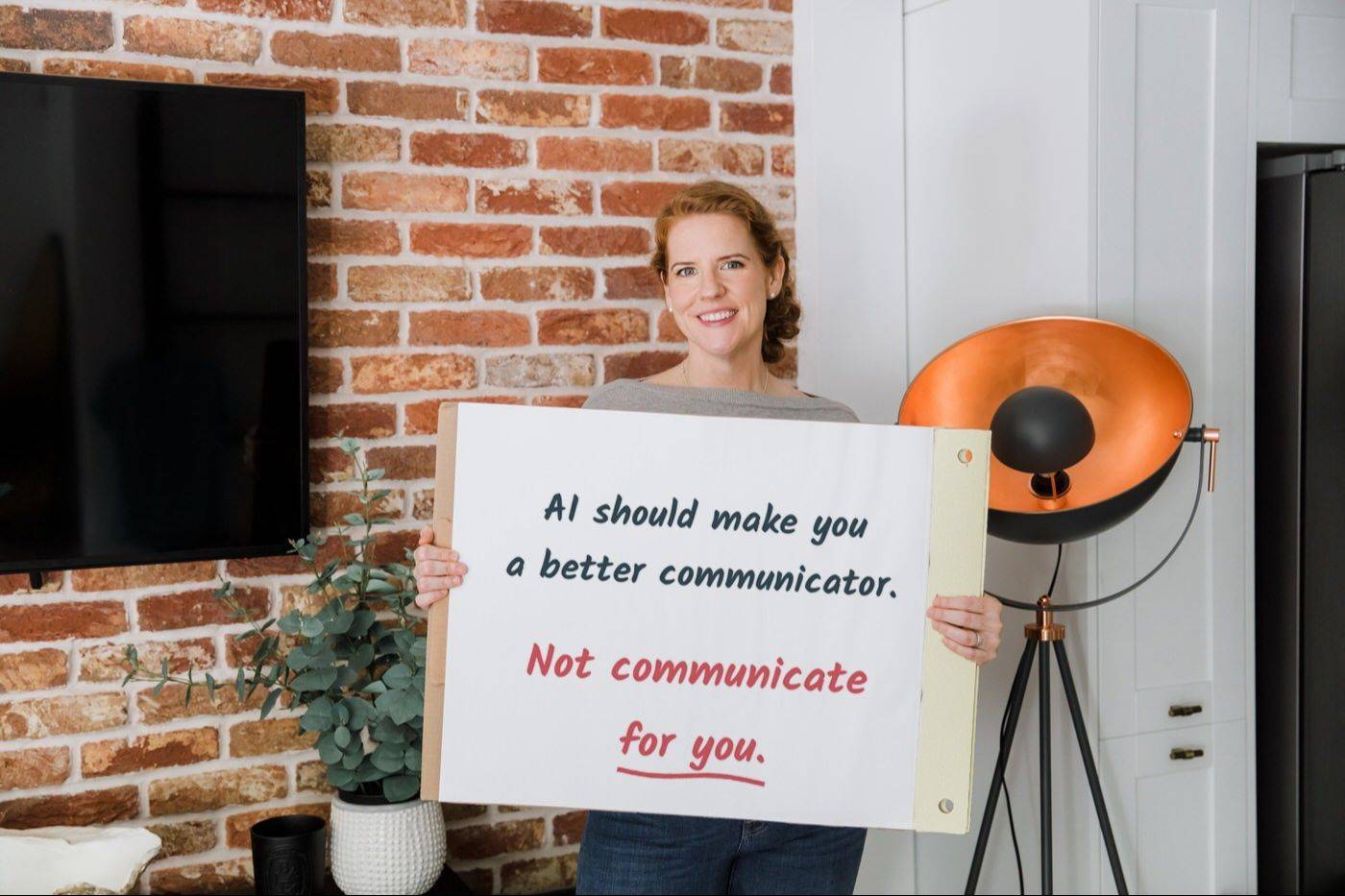

Rebecca Jabbar
Creator of the Brand Champion Bootcamp. Nearly three decades helping people communicate.
The more I use AI, the more convinced I am that the human bit of communication matters
I use AI regularly, and I see enormous value in having something available to question an idea, explore an audience's perspective or help me prepare for a challenging conversation. After nearly three decades helping people communicate, I'm interested in how this can strengthen the thinking and practice behind effective communication.
I'm also conscious of how easy it is to let the technology take over. If it develops the argument, chooses every word and smooths away everything individual about the way we express ourselves, we can end up with something impressive on screen that we struggle to explain naturally.
When you're presenting, speaking in a meeting, handling an interview or answering a difficult question, another person needs to understand you. You need to know your subject, recognise what matters to them and respond when the conversation takes an unexpected turn.
This is where I want AI to be useful: helping people become better prepared, more thoughtful and more capable of communicating for themselves.
Which communication skills matter more as AI gets better?
As AI makes it easier to produce polished words, we still need to develop the skills to use those words thoughtfully. A well-written presentation is useful preparation, but delivering it involves listening, explaining, responding and making decisions in real time.
For me, there are five human capabilities worth investing in:
Understanding your message
Knowing what you mean, why it matters and how to explain it without relying on a script.
Making it relevant
Connecting your expertise with what your audience needs to understand, remember or act on.
Using your judgement
Deciding what's accurate, appropriate and useful to say, including when to acknowledge uncertainty.
Responding to people
Listening to a question, recognising confusion and adapting your explanation.
Communicating with conviction
Bringing your own personality, experience and enthusiasm to what you're saying.
These capabilities are central to becoming a Brand Champion: someone who can represent themselves and their organisation clearly and credibly across different communication situations. AI gives us more ways to develop and practice them, provided we stay actively involved.
How to use AI to improve your communication skills
The most useful starting point is a real communication challenge. You might need to explain a complex idea to colleagues, prepare for a media interview or answer questions about a decision people won't welcome.
With a clear objective, AI can help you examine your thinking and practice how you'll communicate it.
Understand your audience and challenge your assumptions
You can use AI to explore what an audience might already know, what they're likely to care about and where they might disagree. This can help you identify gaps in your preparation or questions you hadn't considered.
Treat these perspectives as possibilities to investigate. Your knowledge of the people, organisation and situation should guide which suggestions are useful, and any factual research needs checking against reliable sources.
Develop and test your message
Bring your own ideas, expertise and intended message into the conversation. You can then ask AI to identify jargon, challenge an unsupported claim or point out where your explanation becomes difficult to follow.
The learning comes from examining this feedback and making decisions about it. You should understand why you're changing something and be able to express the revised message in words you'd comfortably use.
Practice answering difficult questions
AI can help you generate questions and work through them one at a time, including follow-up questions that challenge an incomplete or unclear answer. This creates opportunities to practice before the stakes are higher.
Answer aloud as well as working in writing. Notice whether you can explain your point naturally, whether you're answering the question and whether the words feel like yours.
Adapt your communication to different situations
The same expertise might need a different explanation in a team meeting, a customer presentation and a media interview. AI can help you explore these differences and test whether you've provided enough context for each audience.
Use this process to develop your own ability to adapt. Ask what needs to change and why, then try explaining the idea yourself.
What useful AI-supported practice can look like
Imagine you're preparing to explain a business decision that some colleagues are likely to challenge. You know the reasoning, but you're concerned about becoming defensive or getting lost in detail.
Start by explaining the situation, the audience and what you need them to understand. Give your own account of the decision, including its limitations, then ask AI to raise one realistic question at a time.
After answering, you might ask:
Have I answered the question directly? Which part of my explanation is unclear? What might this person still need to understand?
Review the feedback, decide what you agree with and try again in your own words. Ask for a follow-up question if your answer leaves something unresolved.
This gives you practice in explaining the decision, recognising another perspective and responding under challenge. The aim is to become more comfortable thinking and communicating through the situation, including when the actual questions differ from the ones you prepared.
AI coaching guides in the Brand Champion Bootcamp
The Brand Champion Bootcamp includes AI coaching guides that help you apply the learning to your own communication challenges. They give structure to your conversations with AI, connecting the frameworks and techniques taught in the programme with your role, expertise and audiences.
You can use them to explore your message, challenge your thinking and practice responding in relevant situations. As you work through the learning, you remain responsible for assessing the suggestions, choosing what's useful and communicating in a way that feels natural to you.
The AI support is woven into the programme so you can continue working with the ideas beyond each lesson. It gives you another way to prepare and practice whenever an important communication opportunity comes along.
Develop the skills you'll use when it matters
The Brand Champion Bootcamp develops your ability to communicate across presentations, meetings, media interviews, panels, podcasts and Q&A. It brings together message development, preparation, delivery, managing nerves and handling difficult questions, with practical frameworks you can return to throughout your career.
This combination gives you structured learning, opportunities to apply it and individual support. The Bootcamp is CPD-certified, and if you'd like a taste first, you can start with my free training.
Whether you're developing your own skills or supporting people who represent your organisation, the purpose is the same: helping people understand, remember and care about what you have to say.
Common questions about AI and communication skills
How can I use AI to improve my communication skills?
Use it to explore audience perspectives, challenge your ideas, test the clarity of your message and practice answering questions. Start with your own thinking and a specific communication objective, then evaluate the feedback and try applying it yourself. Speaking your answers aloud helps you move from written preparation into communication practice.
Can AI help me prepare for presentations and media interviews?
AI can help you investigate audience interests, identify gaps in your message and generate questions you might face. It can also support rehearsal through follow-up questions and structured challenge. Check factual information against reliable sources and use your own judgement about what's relevant and appropriate to say.
How is AI used in the Brand Champion Bootcamp?
The Bootcamp includes AI coaching guides to help you apply the programme's communication frameworks and techniques to your own circumstances. They support thinking, preparation and practice alongside the video lessons, workbooks and personal coaching session. The wider programme develops the skills you need to communicate clearly, confidently and credibly.