How to create a message people actually remember

We communicate more than ever before, yet many of the messages we share are forgotten almost as quickly as they're delivered.
Whether you're presenting to colleagues, speaking at an industry event, appearing on a podcast, or answering questions in a media interview, the challenge isn't simply communicating your expertise, it's helping people to actually understand it, connect with it and, most importantly, remember it.
Over the years, I've worked with hundreds of professionals from engineers and technical specialists to founders, senior leaders and corporate spokespeople. What has always fascinated me is that the people with the greatest expertise aren't always the people whose messages are remembered.
The difference rarely comes down to knowledge. More often, it comes down to preparation. At the root of it, we can all learn how to communicate better, and here’s a taste of how.
We often confuse information with communication
One of the biggest mistakes I see is the assumption that if we've shared enough information, we've communicated effectively.
It's understandable. When we know our subject well, we naturally want to explain it thoroughly. We worry about leaving something important out, so we include more detail, more background and more supporting information.
The irony is that the more information we give, the harder it can become for our audience to identify what matters most.
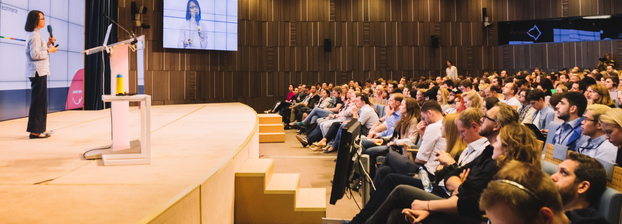
I've often watched presentations where the speaker covers twenty valuable points, yet when I ask people afterwards what they remembered, most could only recall one or two ideas, if any at all.
It wasn't because the speaker lacked expertise, it was because the audience had never been given permission to understand what mattered most.
Your audience doesn't remember everything
One of the most valuable shifts you can make is accepting that your audience will never remember everything you say - and nor should they!
People attend presentations, interviews and meetings whilst balancing their own priorities, distractions and existing knowledge. They aren't trying to memorise every sentence. They're trying to answer a much simpler question: 'What does this mean for me?'
When we recognise this, our role changes. This is where we can learn how to communicate better.
Instead of trying to get across everything we know, we begin helping people identify the one thing we most want them to leave understanding.
This single shift transforms preparation.
Start with one question
Whenever I'm preparing for an important communication opportunity, I don't begin with PowerPoint. I don't begin by writing detailed notes. I begin with one question: 'What do I want people to leave understanding?'
Not twenty things. One.
That doesn't mean your presentation or interview only contains one point. It means every example, story and supporting argument is helping reinforce one central message.
Once that message becomes clear, the rest of the preparation becomes significantly easier; you know what deserves more time, you know what can be simplified, and you become much more confident that your audience will remember what matters most.
Expertise doesn't automatically create clarity
This is particularly important for subject matter experts, because one of the reasons highly knowledgeable people sometimes struggle to communicate clearly is because they can see far more than their audience can.
Years of experience naturally create nuance. You understand the exceptions, the context, the complexity and the detail. Unfortunately, your audience doesn't begin in the same place.
The temptation is to explain everything. The opportunity is to explain enough.
Helping an audience understand a complex subject isn't about demonstrating everything you know. It's about making your expertise accessible.
Because strong communication skills aren't about saying more. They're about helping people understand what matters most - and this is often where communication becomes genuinely memorable.
Stories help ideas stay with people
- Facts are important
- Evidence is important
But people rarely remember lists of information
- They remember moments
- They remember examples
- They remember stories that help them understand why something matters
Throughout my workshops, I encourage people to think carefully about the moments that bring an idea to life.
A well-chosen story doesn't distract from your message, it reinforces it.
Instead of asking your audience to remember information in isolation, you're giving them something meaningful to connect it to.
Preparation creates confidence
Many people believe communication skills confidence comes from experience, but in reality, I think confidence usually comes from preparation.
When you've taken the time to clarify your message, understand your audience and identify the examples that best support your thinking, you no longer need to remember every word.
You simply need to remember where you're heading.
This allows you to communicate naturally rather than trying to perform. It also means you're far better prepared when conversations become less predictable, whether that's a question from the audience, a journalist taking the interview in a different direction or an unexpected discussion during a meeting.
Because ultimately, preparation doesn't make you sound rehearsed, it gives you the confidence to sound like yourself. That’s the real secret in learning how to communicate better, from flow, pacing all the way to exactly what people will take away from your time speaking to them.
Create messages people remember
The professionals who communicate most effectively aren't usually the people who know the most, they're the people who make their expertise easiest to understand.
Before your next presentation, meeting or interview, challenge yourself to answer one simple question: 'What do I want people to leave understanding?'
If you can answer that clearly before you begin, you're already a long way towards creating a message people are far more likely to remember.
If this article has prompted you to think differently about how you prepare for presentations, interviews and other important communication opportunities, I'd love you to join me at my next free 'Create Your Magnetic Message' Masterclass.
Together, we'll explore practical frameworks that help you communicate with greater clarity, confidence and impact, whatever the occasion. See you there!
Rebecca Jabbar