Has hybrid working changed public speaking anxiety, or simply reshaped it?
hybrid presentations presentation anxiety
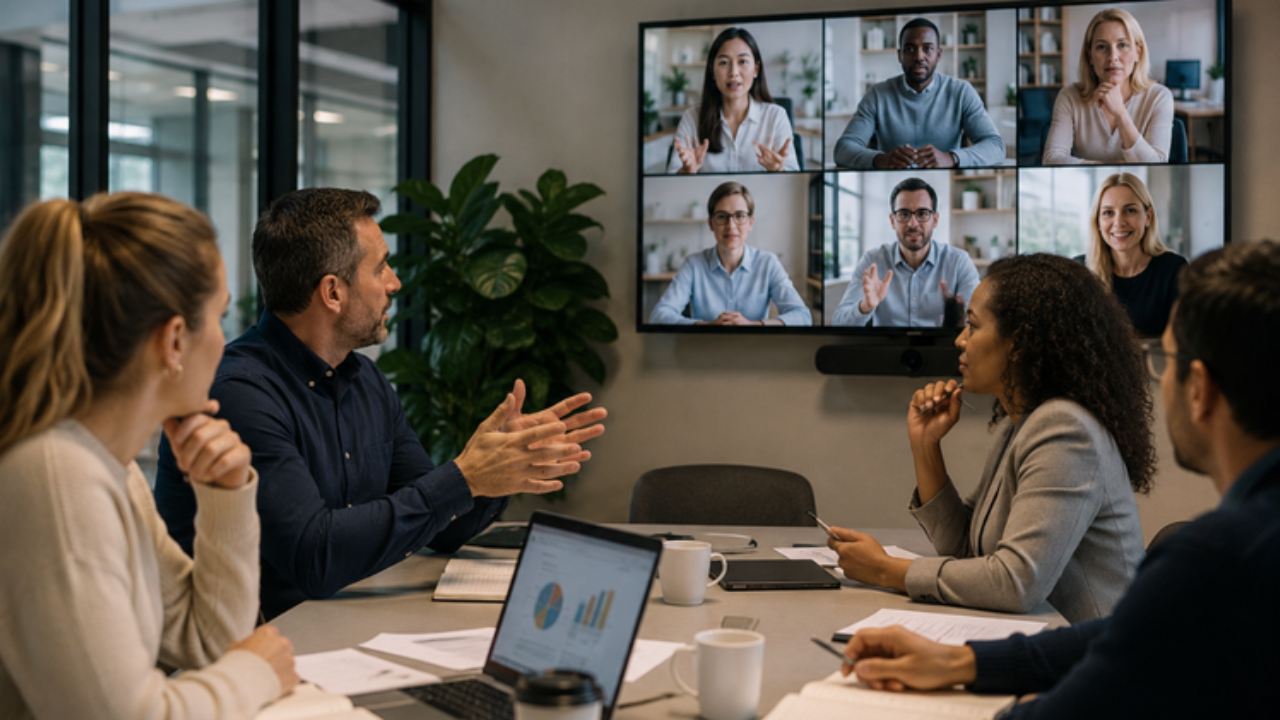
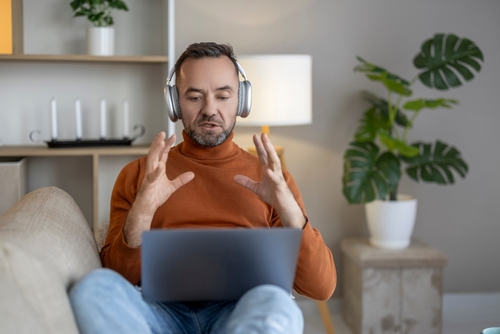
Hybrid meeting with men and women presenting from the room and on the screen

Back in 2019, research from Jobsite UK found that fear of public speaking was already affecting career decisions, with many professionals avoiding opportunities because of it.

Since then, the workplace has changed dramatically.

Hybrid meetings, remote presentations, Teams calls, recorded videos, and virtual events have all become part of normal working life. And whilst some professionals now communicate more often than ever before, many are doing so through a screen rather than in a room full of people.

So the question is: has hybrid working actually made public speaking easier, or has it simply changed the type of communication pressure people experience?

Public speaking anxiety hasn’t disappeared

Despite the shift towards virtual communication, public speaking anxiety remains incredibly common.

Recent statistics suggest that around 75% of people still experience some level of fear around public speaking, whilst presentation and communication skills continue to play an increasingly important role professionally.

Communication pressure hasn’t disappeared. In many cases, it’s simply changed shape.

Because public speaking today no longer just means standing on a stage with a microphone. It now includes:

  • Leading Teams meetings
  • Presenting virtually to clients
  • Speaking on webinars
  • Recording videos
  • Contributing on virtual panel discussions
  • Speaking up in large hybrid meetings
  • Handling questions live online

For many professionals, visibility now happens daily, even if they rarely step onto a physical stage.

Why virtual communication can feel easier

For some people, hybrid working has genuinely reduced the intensity of traditional presentation anxiety.

There’s often less pressure than physically standing in front of a room. You may be able to rely more on notes, control your environment more easily, or avoid the feeling of having dozens of eyes directly on you.

Even small things can help people feel more comfortable:

  • Sitting in familiar surroundings
  • Presenting from home
  • Seeing fewer audience reactions
  • Knowing cameras may be switched off

For professionals who previously found physical presentations overwhelming, virtual communication has sometimes acted as a useful stepping stone.

But new communication challenges have emerged

At the same time, hybrid working has introduced entirely new communication habits and pressures.

Many professionals now spend less time:

  • Speaking spontaneously in groups
  • Reading body language in real time
  • Holding attention physically in a room
  • Managing audience energy and reactions live

And after years of remote meetings, some people have become more comfortable communicating digitally, but less confident communicating visibly.

You can often see this when professionals return to physical events, client presentations, or panels. Communication that feels natural one-to-one or online can suddenly feel much more exposed in person.

Virtual meetings have also introduced their own challenges:

  • Talking over one another
  • Struggling to judge audience engagement
  • Over-explaining to fill silence
  • Becoming overly reliant on notes or slides
  • Feeling disconnected from the people listening

In some cases, professionals are communicating more frequently than before, but with fewer opportunities to properly develop confidence in live, high-visibility situations.

One of the biggest virtual communication advantages is often wasted

What’s interesting is that virtual communication also gives speakers something incredibly powerful that doesn’t always exist in physical rooms: the ability to make every individual feel directly spoken to.

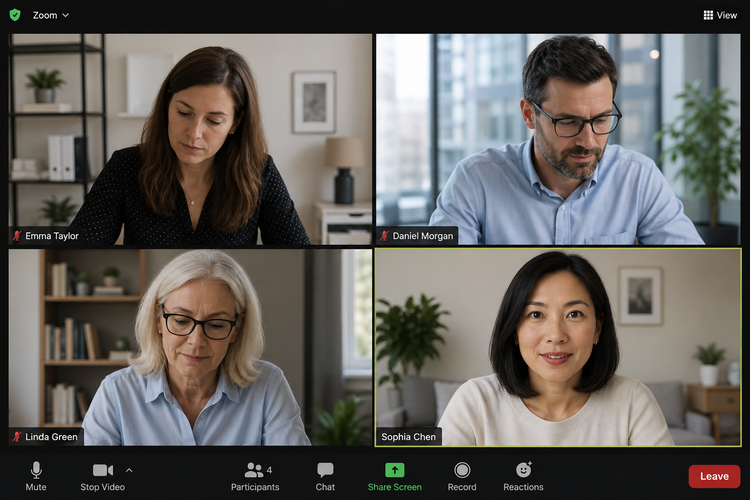
When you look straight into your webcam whilst speaking, your audience experiences that as eye contact.

And unlike a physical presentation, where eye contact naturally moves around the room, virtual speaking allows every single person watching to feel as though you’re looking directly at them at the same time.

This matters.

Because when people feel looked at, they are more likely to listen, stay engaged, and trust the speaker.

Ironically, many professionals do the opposite. They spend most of their time looking at themselves, their notes, or the gallery view of other participants instead of the camera itself.

The speakers who use the camera well often stand out immediately, particularly when they are part of a panel or meeting where others aren’t doing it.

It creates connection very quickly.

The real issue is visibility, not personality

One of the biggest misconceptions around public speaking and communication confidence is that some people are simply ‘naturally good’ at it whilst others are not.

In reality, many communication challenges come from pressure interfering with structure, clarity, and delivery.

  • Thinking speeds up
  • Breathing changes
  • People over-explain
  • They lose track of their point
  • They become more aware of themselves than the audience

This is rarely a reflection of intelligence or capability.

More often, it’s a communication skill that hasn’t yet been properly developed under pressure.

And this matters professionally because visibility increasingly shapes opportunity.

The professionals who progress aren’t always the loudest or most extroverted people in the room. Increasingly, they’re the people who can communicate clearly, naturally, and credibly across different environments when visibility matters most.

If you’d like more free presentation and communication tips, including how to use your ‘Three Golden Moments’ when speaking, you can sign up via the Course Details page.