Ten practical ways to manage presentation anxiety
You’re heading towards a presentation. The moment is getting closer, and the nerves are starting to build. This is normal, especially when the outcome matters.
The key isn’t to try and remove those nerves completely, it’s to manage them in a way that allows you to stay clear, focused, and natural when it counts.
Here are ten practical ways to do exactly that.
Focus on your audience, not yourself
Anxiety often comes from thinking about how you’re being perceived, you need to shift this focus.
Ask yourself what your audience needs, what they care about, and what will be useful to them. When you’re clear on the value you’re bringing, it becomes much easier to feel grounded in what you’re saying. Read more about why presentation anxiety happens
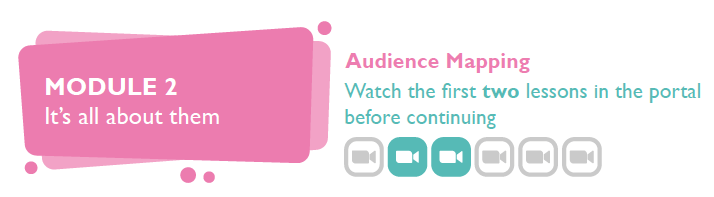
The second module of The Brand Champion Bootcamp also guides you on mapping your audience and understanding how to focus on what matters to them.
Keep your structure simple
You don’t need a complicated presentation to be effective.
Aim for three to four clear sections for your presentation flow. This gives your presentation shape and makes it easier for both you and your audience to follow.
Each section could then have 3–4 slides (max). PPT overwhelm isn’t just bad for your audience, it’s not great for you either.
Stick to one key message per slide
One of the quickest ways to feel overwhelmed is to try and say too much at once, therefore, each slide should have one clear point. And the point is the message you want your audience to take away.
Keep that message for yourself rather than writing it out in full on the slide. Your role is to bring it to life in as natural a way as possible on the day.
Ditch the script
Scripts can feel safe, but they often make you sound unnatural.
If you’re trying to remember exact wording, you’ll likely come across as robotic or lose your flow if you forget a line.
Instead, work from key points or short prompts. This allows you to speak more naturally and stay connected to your audience.

Avoid over-preparing at the last minute
Preparation matters, but over-preparing can work against you.
If you keep revisiting your slides or trying to perfect every word right up until the presentation, you risk exhausting your thinking and increasing your anxiety.
In the final day or two, shift to focus only on what the key message is for each slide (Tip 3) and trust that the words you will use will come to you naturally on the day.
Know the room and the tech in advance
Uncertainty creates unnecessary stress, so, if possible, find out what the room will be like, how the technology works, and what setup you’ll be using.

If it’s a larger or more important presentation, visiting the space in advance can make a real difference, because familiarity can build confidence.
Clear your mind the night before
If your mind starts racing the night before, don’t try to ignore it.
Keep a pen and paper by your bed and write down whatever is running through your head. It helps your brain ‘park’ those thoughts so you can rest properly.
Better rest leads to better clarity.
Set everything up early on the day
On the day, aim to get into the room early and set up your slides and equipment.
This removes the risk of last-minute issues and gives you time to settle in. Once everything is ready, you can step away, reset, and come back in with a clearer head.
Get rid of excess nervous energy
Nerves create physical energy in your body, and if you don’t release it, it can show up in your delivery, whether that’s speaking too quickly, over-talking, or feeling tense.
Do something physical on the morning of your presentation, a walk, a run, or even just a few minutes of movement.
Then, closer to the time, use your breath to reset your system: do a number of slow inhales followed by faster, more forceful exhales to release tension.
Decide you’re going to enjoy it
This might sound simple, but it’s powerful.
Instead of focusing on what might go wrong or how you’re being judged, shift your mindset to the experience you want to have.
You’ve prepared. You have something valuable to say. Allow yourself to enjoy the opportunity to share it, because the more you do the more your audience will.

Good luck! X
p.s. If you want to go a step further, you can also explore the three moments in any presentation where people are most likely to listen, and how to use them effectively. You can access these Three Golden Moments for free at the bottom of the Brand Champion Bootcamp Course Details page
Rebecca Jabbar